






This legible, connected network of canals, rivers, parks, towpaths and tree-lined streets should mean that walking and cycling across the city region becomes not an afterthought but a defining feature of urban life, writes Martyn Evans
There are moments in a city’s life when an idea feels both utterly obvious and quietly radical. CyanLines is one of those moments.
Recently launched in Manchester, CyanLines proposes something disarmingly simple: a legible, connected network of blue and green routes – canals, rivers, parks, towpaths and tree-lined streets – that are stitched together so that walking and cycling across the city region becomes not an afterthought but a defining feature of the city’s life.
In a dense, ambitious city like Manchester, that matters. Connectivity across green and blue infrastructure is not a lifestyle extra; it’s economic infrastructure.
We talk endlessly about connectivity in terms of rail capacity, airport slots and digital bandwidth. We measure it in minutes saved and journeys shortened. But the connectivity which shapes a good life in a busy city is often slower, quieter and greener: a safe towpath along the Bridgewater Canal; a continuous riverside route along the Irwell; a cycle-friendly link from Mayfield, through the city centre to MediaCity in Salford.
These are not “nice to haves”. They are the connective tissue that allows talent to move freely, communities to mix, and businesses to cluster in ways that create value. Cities that thrive in the 21st century are those that understand this.
Look at Copenhagen. Its investment in connected cycling infrastructure has not only delivered enviable quality-of-life metrics, it has become part of the city’s global brand, attracting international companies, skilled workers and tourists who see a place that prioritises health, sustainability and human-scale design.
Or Amsterdam, where the integration of water, landscape and very walkable streets has made the everyday commute an act of civic pleasure.
Closer to home, Birmingham’s recent efforts to reclaim canals as civic space show that cities once defined by heavy industry can reimagine blue infrastructure as an economic catalyst. CyanLines sits squarely in that lineage.
Manchester has always been a city of infrastructure. The canals which powered the Industrial Revolution were the original blue lines of connectivity. The railways that radiated outwards made it the workshop of the world. CyanLines feels like a contemporary echo of that ambition, making a re-imagined network visible, legible and celebrated.
Manchester has also always understood that its competitive edge lies not just in rental yields or office take-up, but in the lived experience of the city
By drawing a clear identity around a network of existing and proposed routes, the project reframes scattered assets as a coherent system. It is a powerful shift in perception.
Investors, residents, workers and visitors alike respond to this kind of clarity. In an era of economic uncertainty, cost challenges in development and constrained public finances, clarity is currency.
Manchester has also always understood that its competitive edge lies not just in rental yields or office take-up, but in the lived experience of the city. Talent chooses cities, not the other way around, and business follows talent. Capital follows both.
This green and blue stuff is good for business. If CyanLines makes it easier for a graduate living in Ancoats to cycle to work at MediaCity, for a family in Salford to access green playspace, for a visitor to walk the city’s waterfronts with confidence, it is quietly strengthening the economic fabric of this great city. Quality of life is not separate from growth; it underpins it.
Projects like this do not happen by accident. They require civic courage and collaborative leadership. The involvement of Tom Bloxham of Urban Splash and Pete Swift of Planit-IE – figures long associated with Manchester’s regeneration story – signals that CyanLines is rooted in the city’s placemaking DNA. They understand that infrastructure without narrative is just Tarmac, that successful urban projects need story as well as strategy.
Political leadership has been equally important. Under the mayor Andy Burnham, the Greater Manchester Combined Authority (GMCA) has consistently championed active travel and integrated transport as economic levers. His willingness to frame cycling and walking as part of a broader growth strategy across the region gives projects like CyanLines political momentum.
At Manchester City Council (MCC), leader Bev Craig has consistently articulated a vision of Manchester as a city that is growing inclusively – where connectivity across neighbourhoods is a lever for opportunity. Both were front and centre at the launch of the project at Manchester’s Aviva Studios at the end of last year.
Leadership in this context is not just about ribbon-cutting. It’s about sustained advocacy, about making the case repeatedly that investment in blue and green infrastructure is investment in economic resilience.
A project like this is not just about wellbeing. It’s about productivity too. Research consistently shows that access to green space correlates with improved mental health, reduced absenteeism and higher workplace satisfaction. In knowledge economies, where output depends on happy, healthy workers, those things translate directly into measurable economic value.
Connected active travel networks also reduce congestion and improve air quality, cutting healthcare costs and enhancing urban efficiency. They are also capable of unlocking development sites, previously perceived as peripheral, by bringing them within easier walking or cycling reach of major employment centres.
In Manchester’s case, the alignment of CyanLines with major growth areas like Mayfield, the Oxford Road Corridor, Salford Quays, and emerging neighbourhoods along the Irwell creates a multiplier effect. Blue and green connectivity enhances land values, supports mixed-use schemes and strengthens the case for inward investment.
International investors increasingly benchmark cities not only on investment yields, talent retention and transport hubs, but on liveability indices and ESG credentials. A coherent CyanLines network sends a signal – Manchester is serious about sustainable growth.
But ambition alone will not make CyanLines fly. I think three things feel essential:
- First, design excellence. Routes must be genuinely safe, beautifully detailed and seamlessly connected. If a single junction feels hostile, the network’s credibility suffers. Practical delivery has to match the vision.
- Second, an innovative approach to funding. GMCA and MCC have pledged early support, but a generally constrained public purse means the model will need creativity: private sector investment aligned to value growth, clever corporate sponsorship or impact investment mechanisms tied to health and carbon outcomes could provide solutions.
- Third, storytelling. CyanLines must become part of Manchester’s civic identity – mapped, signposted, celebrated in schools and workplaces. The more people use it, the stronger will be the political mandate to extend and enhance it.
Other UK cities should pay attention. From Leeds to Liverpool, from Bristol to Glasgow, many urban areas have fragments of blue and green infrastructure. What Manchester is demonstrating is the power of coherence and brand.
By naming and mapping the network, by placing it at the heart of economic strategy rather than at the margins of parks policy, CyanLines is elevating the conversation and labelling blue and green infrastructure as growth infrastructure.
Manchester has shown, once again, that it is prepared to think long term. The challenge for the rest of us now is collective. Developers must see the value in aligning schemes with the network, businesses must champion it as part of their ESG commitments and residents must use it, advocate for it, and hold its leaders and stewards to account for its delivery and maintenance.
The project’s launch last September was a moment. Now we need to sustain the applause that rang out for Tom, Pete, Andy, Bev and the private sector supporters they gathered to celebrate the project.
It needs sustained commitment, because in the quiet act of walking or cycling along a canal, beneath trees or beside water, we are not simply moving from A to B – we are building the connective tissue of a prosperous, confident city that will benefit us all.
Postscript
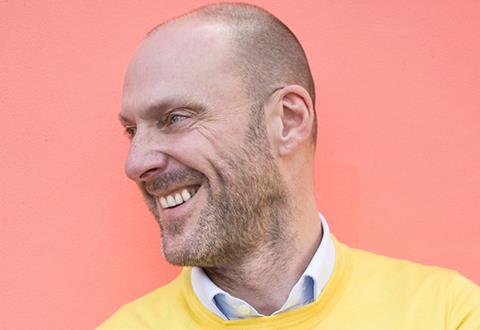
Martyn Evans is creative director of Landsec
Through ongoing analysis and expert commentary, Regen Connect highlights the policies, funding streams and local priorities that matter most to the construction and development sector.
This coverage will culminate in a special report to be published at our Building the Future Live Conference in London on 7 October.
How you can get involved:
Throughout the year, our team will be gathering insight from across the sector to inform editorial features, debates and events. We welcome contributions from practitioners who want to share experience or shine a light on emerging trends.
Click here for more on the campaign
Be part of the conversation – contact us to contribute or get involved by emailing our deputy editor at dave.rogers@building.co.uk and to find the campaign on social media follow #regenconnect







2 Readers' comments