



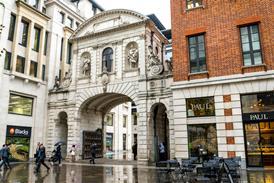





Coles Conservation Architects working with City of London on restoration of Christopher Wren-designed gateway
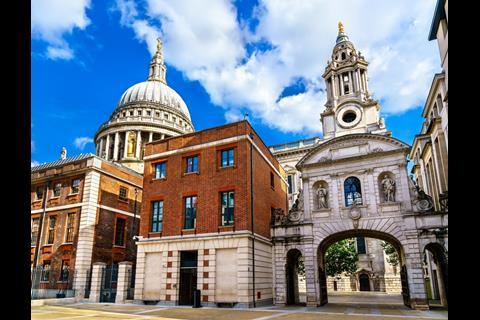
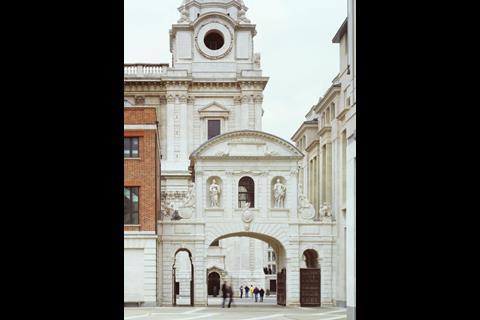
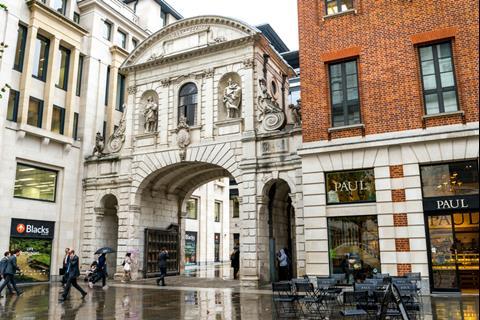
The City of London has submitted a planning application to reinstate the historic iron spikes used to display the severed heads of traitors on the top of Temple Bar.
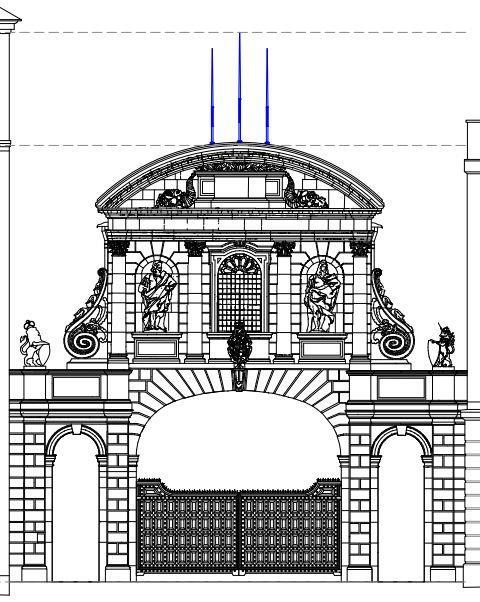
Plans by Coles Conservation Architects would see the installation of three spikes between 3m and 3.5m tall on the roof of Christopher Wren’s grade I-listed gateway, which once formed the ceremonial entrance to the City from Westminster.
The City of London Corporation said the idea had arisen from discussions around how the structure is presented to the public and from “a desire to better reveal an aspect of the monument’s history”.
One of the earliest examples of the baroque style in England, Temple Bar was built in 1672 on the orders of King Charles II to replace a succession of wooden gateways which had marked the boundary between the two halves of the capital since the 12th century.
The Portland stone structure and its wooden predecessors served an important ceremonial function for centuries as the place where monarchs would pause to request permission to enter the City during state processions.
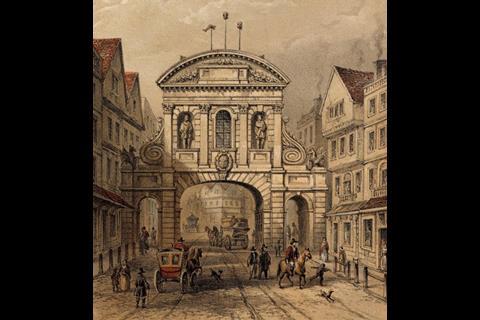
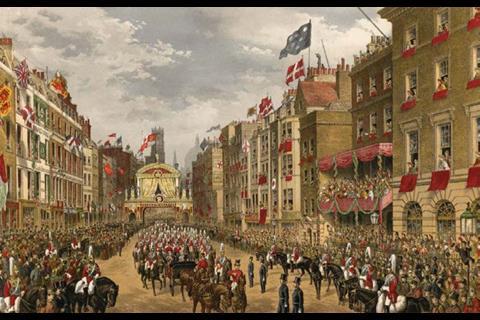
It was also used to display the heads and body parts of high profile people who had been executed as a warning to those passing by. The spikes were last used for this purpose to exhibit the remains of rebels who had been executed following the 1745 Jacobite uprising.
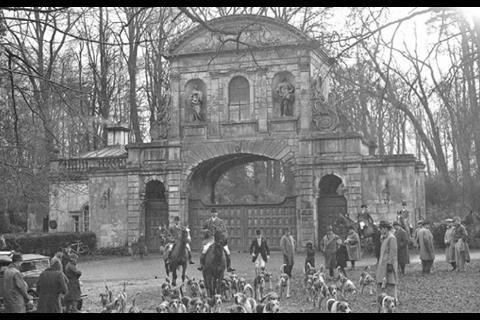
Long-criticised as a choke point for traffic, the structure was eventually demolished in 1878 and reassembled at Theobalds Park in Hertfordshire, where it stood for more than a century before being moved back to London in 2004 as an entrance to the newly redeveloped Paternoster Square.
However, the spikes had previously been lost and were not included in the monument’s reconstruction.
Coles Conservation Architects said in planning documents that their omission had “softened the appearance of the monument and removed a feature that had formed part of its identity for a significant period of its history”.
The design of the new spikes has been informed by historic drawings and would be “simple and legible” with a “dark, visually recessive” finish, according to the practice. The City is aiming to install the spikes within later brickwork added during the reconstruction in order to avoid the monument’s original 17th century masonry.
Historic England has welcomed the reinstatement of the spikes but has advised the installation of a new information panel explaining the history of the monument.
The heritage advisor said: “This macabre aspect of Temple Bar’s historic interest, as the backdrop to punishment rituals, is given as one of the principal reasons for designation in the list entry, which the proposals could help to better reveal.”
The scheme is also supported by the Worshipful Company of Chartered Architects, which occupies the upper chamber within the monument, as a means of “improving public understanding of an important aspect of Temple Bar’s history”.







No comments yet