






Merseyside building has been vacant for 30 years
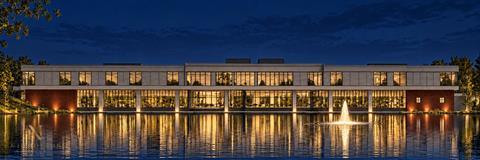
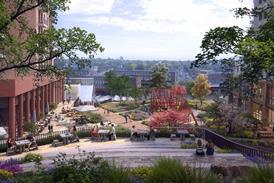
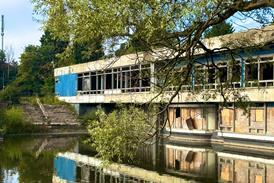
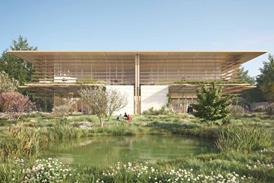
The owner of a grade II-listed modernist building near Liverpool which has stood vacant for three decades has submitted plans to transform the derelict building into 45 homes.
Nicholson Group is using its own in-house architects to design the refurbishment of the Pilkington Headquarters canteen, which was designed by Edwin Maxwell Fry of Fry, Drew and Partners between 1959 and 1963.
The mid-century landmark is located within the Alexandra Business Park in St Helens and was originally built for the glass manufacturer Pilkington Brothers.
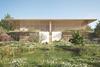
The two-storey glass and concrete structure, which faces directly onto a lake on its southern side, was designed to demonstrate the architectural possibilities of its occupier’s products.
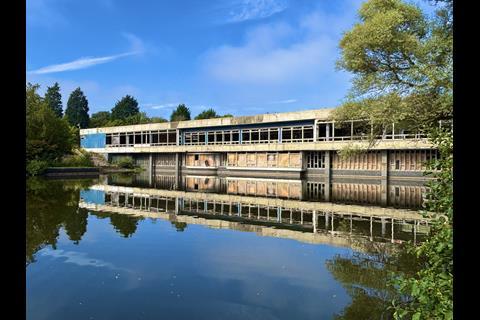
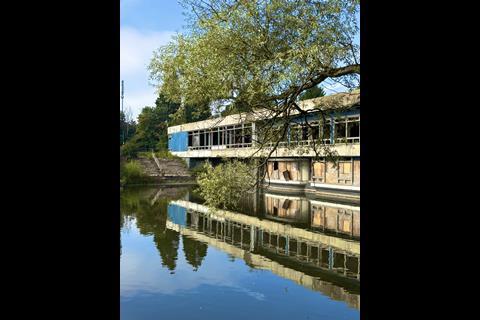
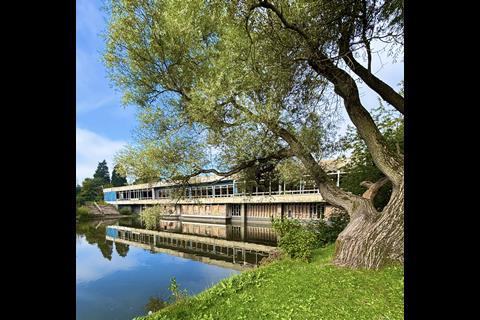
It was grade II-listed in 1995 but closed the following year, with plans to convert the site into housing in 2008 failing to get off the ground before the building was purchased by property developer Nicholson Group in 2023.
Historic England considers the canteen and the wider office campus as one of the UK’s “earliest and best-surviving examples of a greenfield headquarters complex”.
In its list entry for the site, the heritage body described the buildings as “strikingly elegant” and well preserved with a “high level of intactness”.
Nicholson Group chief executive Paul Nicholson said the firm’s £6m proposals for the building were seeking to “balance the preservation of its protected mid-century heritage with forward-thinking commercial and community utility”.
He said: “Unsurprisingly, every time we are at the property, so many people from the local community share their stories of when either themselves or relatives worked at the Pilkington complex and they are genuinely thrilled to see the building being saved.”
“Our ambition is to give the former Pilkington canteen a sustainable future as 45 homes, preserving the architecture and its relationship with the water and landscape. This is a place that deserves to be brought back to life, with its identity intact.”
If approved, the 73,000sq ft scheme would start construction in January 2027.


No comments yet