







Scheme will initially focus on upgrades in Yorkshire and includes new line between Birmingham and Manchester as long-term objective
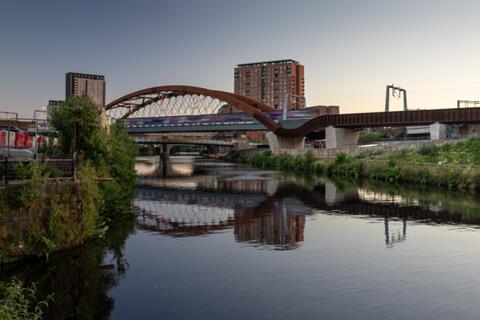
The government has published its plans for the long-awaited Northern Powerhouse Rail scheme.
The plan to improve rail links across the north of England has been supported in principle by successive governments but without significant practical progress.
Today, the Department for Transport set out the Labour government’s vision for a £45bn scheme, split across three phases, and including an entirely new rail route between Liverpool and Manchester.
The long-awaited plans have been welcomed by the infrastructure sector, though they are smaller in scope than the proposals set out by Transport for the North in 2018.
Those proposals, which were integrated with now-ditched plans for a northern leg of HS2, set out a plan to invest £70bn and would have included an entirely new line between Manchester and Leeds.
The first phase of the scheme will prioritise upgrades and electrification between Leeds-Sheffield, Leeds-York and Leeds-Bradford, expected to be delivered in the 2030s.
Following this, a second phase, expected to begin in the 2030s, will see the delivery of the new route between Liverpool and Manchester, which will include three new stations at Manchester Airport, Manchester Piccadilly and Warrington Bank Quay Low Level.
A direct journey of 29 miles from Liverpool to Manchester Airport currently takes one hour and 25 minutes, compared with the 22-minute journey between Reading and London, which covers 35 miles.
A third phase will focus on improving cross-Pennine connections between Manchester and Sheffield and between Manchester and Leeds, as well as exploring options for links between Manchester to Bradford.
A funding cap of £45bn will be set for the programme, including £1.1bn over the current Spending Review period allocated from existing budgets first.
The government said lessons would be learnt from HS2, promising to work closely with local partners to ensure planning processes are “carried out efficiently, and approvals are streamlined to reduce delays and prevent projects going over budget”.
It has also set out a long-term objective to build a new north-south line from Birmingham to Manchester.
While this would connect the same cities as the cancelled second phase of HS2, the government said the new line “won’t be a revival” of that scheme.
“Instead, the government will launch a feasibility study, working with local partners on what will be delivered, when and to what specifications,” it said.
“For too long, the North has been held back by underinvestment and years of dither and delay – but that ends now,” said Heidi Alexander, transport secretary.
“This new era of investment will reignite the economy across Liverpool and Manchester, helping their iconic sport and cultural industries to thrive, and cementing Manchester Airport as the gateway to the North.”
“This exciting new line will not only speed up journeys, it will open up new jobs and homes for people, making a real difference to millions of lives.”
Huw Merriman, chair of Liverpool-Manchester Rail Partnership Board and HS2 minister under the previous Conservative government, said: “It is excellent to see the government backing [NPR] in full from the outset, enabling proper planning and delivery that learns the lessons of HS2, as well as keeping options open for addressing North–South capacity on the West Coast Mainline.”
Ben Goodwin, director of policy and public affairs for the Civil Engineering Contractors Association, said NPR would be a “once-in-a-generation investment” in the UK economy, but said industry needed “clarity and confidence if it is to plan, invest, and mobilise effectively”.
“The concept of the Northern Powerhouse has been around for more than a decade,” he said.
“If the Government is to make sure it is now successfully delivered, it needs to work with industry to ensure that inefficiencies associated with delays, redesigns, or stop-start decision-making are avoided.”
He emphasised the need for “clear funding structure and a detailed delivery plan”, noting the lessons learnt from recent major projects.
Sam Gould, director of policy and external affairs at the Institution of Civil Engineers, said the announcement was “hugely welcome and long overdue”, but said government and other stakeholders “must learn the lessons from HS2”.
“The purpose of the project must be clear, who is in charge must be clear, the right capability and understanding must be present in government departments, and the project must be sufficiently developed before ground is broken,” he said.
General secretary of transport union TSSA, Maryam Eslamdoust, said the announcement was “long on aspiration but desperately short on delivery details”.
She said it was “vital the government acts at pace to deliver these plans and signal a break with the austerity of the past, funding projects like Northern Powerhouse Rail by properly taxing the super-rich, not just ordinary hard-working people”.
“If not, this risks becoming another press release instead of a plan, with delays, exclusions and public trust once again paying the price,” she said.
Today’s plan also included a range of other announcements.
In the North-east, work on the business case for the Leamside Line will be taken forward, while plans to add capacity at Manchester Airport in the short-term, by lengthening platforms at the existing station, have been approved and backed by £115m.
Meanwhile in Merseyside, improvements to busy stations, such as Liverpool Lime Street and Liverpool Central, are also being considered alongside work being undertaken by the government and Liverpool City Region to explore options for a major regeneration scheme in the city centre.
The rail upgrade plans are part of a wider plan for the North, to be published in the spring, which will include plans for a “northern growth corridor” from Liverpool to York.







No comments yet