







Mayors to get powers over income tax and business rates
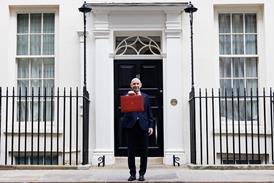
The government has fleshed out its plans to devolve more powers to regional leaders in today’s Budget with mayors to be handed control of business rates by the end of the decade.
In a new funding model for regions announced by chancellor John Healey today, mayors will be given a 20% share of business rates from next year and, in 2028, an assignment of income tax and powers to introduce overnight visitors’ levy.
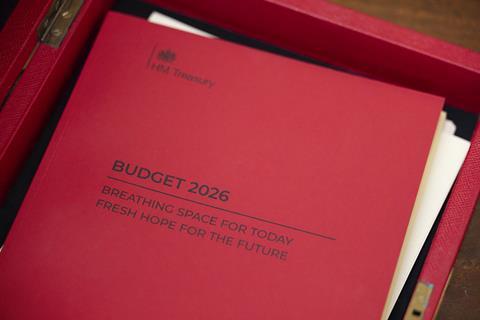
A strategy called Rewiring the State Delivery Plan will be published by the end of this year with fiscal devolution baselines to be outlined at next year’s Spending Review.
The Treasury has today published a Fiscal Devolution Roadmap setting out what it described as a plan to “fundamentally rewire the state”.
The department said in the strategy, which is aiming to rebalance regional wealth disparities, is “calling time on central government thinking it knows best and giving control to those who do: local leaders with skin in the game.”
The first wave of new Mayoral Strategic Authority (MSA) Business Rates Retention Zones will include Greater Manchester, East Midlands, Hull and East Yorkshire, Liverpool City Region, Tees Valley, West of England, North East, and York and North Yorkshire Strategic Authorities and the Greater London Authority.
Mayors will receive part of locally generated income tax from April 2028, although the government is not devolving the power to set income tax rates or thresholds to mayors.
Income tax assignment is planned to constitute the majority of future MSA revenue with the assigned tax to be based on employment earnings, self-employment earnings and pension income on the basic-rate income tax.
The plans include ‘Good Growth Funds’ to enable mayors to combine different funding tools to create a single local investment approach aligned with public financial institutions, pension funds and private capital.
Healey confirmed £165m for Good Growth Funds in 2027-28 and a further £120m for incubator capital funding for areas transitioning towards a devolution deal or strategic authority status.
The chancellor also confirmed the establishment of a £1.5bn borrowing facility for MSAs, to be operational by April 2028, which will allow mayors to build up the capability to operate devolved loan funding.
At-a-glance: what the Budget means for construction
-
Reforms to ‘green book’ used by Treasury to assess business case for investing in projects - new guidance on developing place-based business cases which will mean housing projects can be considered together with other types of development
-
Extra £1.5bn for the Social and Affordable Homes Programme
-
New £4.7bn Your First Home equity loan scheme aimed at supporting 70,000 first-time buyers with up to 20% government equity loans
-
Freeze on building regulations except those concerning critical safety for rest of this Parliament
-
Removal of BNG requirements on brownfield land up to 1.5 hectares
-
Cheaper borrowing for councils for housing by extending the preferential Public Works Loan Board rate for a further year, to 2027-28, at 40 basis points below the PWLB normal rate
-
Zero-rate of VAT for land sold to registered providers of social housing
-
Flexible funding to invest in local authorities, boosted by £1.5bn of devolved loans for mayoral authorities - will back transport and regeneration projects
-
Roadmap for fiscal devolution - 100% of business rates will be retained by end of the decade
-
£100m local apprenticeship service funded from savings in welfare fraud and error
-
White paper and legislation next year on reforming welfare system following Milburn report
-
Further £430m for rough sleeping
-
The government will introduce a new First Time Buyer ISA from April 2029
-
New planning guidelines requiring datacentres to boost local jobs, fund apprenticeships, protect nature and minimise water usage
-
£165m in Good Growth Funds for 14 mayoral authorities in England
-
National Wealth Fund and British Business Bank will be handed an additional £20.4bn in funding over the next four years
-
Updated £750m Infrastructure Pipeline to be published before the end of the year
-
Extension of temporary 3.7p-per-litre red diesel duty cut for a further six months
-
Pledge to only buy or build renewable energy projects which bring down bills and when they connect to the grid.
-
Levy used to fund hydrogen projects to be scrapped and replaced by direct government funding







No comments yet