As construction professionals, it is our responsibility to create a built environment in which everyone has a stake, to deliver long-term value that may come at some short-term cost, writes Pete Smith
On 20 January 2025, the 47th President of the United States of America issued executive order 14151, “ending radical and wasteful government DEI programs and preferencing”. In his address, he announced that “America will be ‘woke’ no more”.
Progression should be based on merit. Why should a job go to a woman if the male applicant is better qualified? Why should it be a person of colour if the person without colour is more qualified?
Surely, everyone wants the “best” person for the job? And, after all, our monoculture of academically qualified people has been getting along just fine. We all “get” each other.
This is the polite face of bias, rooted in generations of oppression and discrimination which has made it a foregone conclusion that the straight, white, middle-class man is statistically more likely to be offered the job.
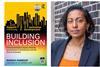
In an article for Building Design in September 2024, shortly after the publication of her book Building Inclusion, Marsha Ramroop issues a call to arms for the construction industry to consider seriously both the scale of the challenge and the benefits of taking it on; to remove that fetid finger from the scale and realise a built environment shaped by a profession that is truly representative of the people it is there to serve.

As somebody who has enjoyed that inherited privilege, this is difficult to write – but that is the point. It is inevitable that those who have profited (and continue to profit) from repression should feel threatened by the prospect of becoming irrelevant – or worse, a burden; that we must somehow negotiate the injured pride of the white man before progress can be made.
And so, “equality” has become a dirty word in certain circles. So too the “woke” agenda that insists on it. There is an argument that equality, diversity and inclusion (EDI) is a misguided liberal attempt to accommodate every part of society at any cost, when really there is not enough money to be navel-gazing and we must get on with the job at hand.
Diversity is a fact; inclusion is an act; equity is the impact, when CQ (cultural intelligence) is unpacked
Marsha Ramroop
As construction professionals, it is our responsibility to create a built environment in which everyone has a stake, to deliver long-term value that may come at some short-term cost because the price of indifference will be much, much higher. In Building Inclusion, Ramroop asks us to take a step back and put purpose before profit, to build a workforce that reflects the diversity of the wider community and which will encourage new thinking, not an echo chamber of ignorance.
Helpfully, her book provides a comprehensive guide to help us better understand our own bias; to reflect on it, and introduce positive processes which can help us to find that much-needed balance. That process must be different for every person and every organisation, so it leans away from the prescriptive, instead setting out tools, resources and references to equip the reader relative to their own appetite and drive.
And this is a central theme, echoed within each of the case studies that punctuate the book (and were for me a particular highlight, illustrating practical applications of EDI theory); that the outcomes are proportionate to the input and, with the appropriate motivation, the benefits can be transformative.
The many accompanying testimonials offer an insight into the damage caused by discrimination, articulating the “why” that must fuel the “how”. Small steps can be transformative, from changing the words we use, to addressing over and under-representation through recruiting differently, building a workforce that reflects the diversity of the wider community.
The chapter on “inclusion in the workforce lifecycle” offers some insight into the pitfalls of “culture fit”, where an offer of employment is based on a fixed idea of what the company is, rather than an openness to what it could be. Banal uniformity is the result.
Instead, Ramroop writes about a “culture add” environment, where we are open to the possibilities of engaging with diverse perspectives. Again, that idea of being prepared to look at things differently and question the way things have been done before. After all, hasn’t that been the defining characteristic of the most epochal design innovations – to unpick the established and consider another way?
Though bias permeates every aspect of our industry, from the way we procure buildings to the materials with which we build them, Ramroop’s emphasis is always on people. I think this comes from a belief that we are generally good and have an appetite to affect change, not through governmental diktat, but by being awake to our history, its abstract social dynamic, and the belief that there is a better way. And then acting on it.
Postscript
Pete Smith is an architect with Collective Architecture living and working in Glasgow. Marsha Ramroop’s book, Building Inclusion: A Practical Guide to Inclusion in Architecture and the Built Environment, is published by Routledge


No comments yet